As Veterans Day approaches, it is worth looking beyond the image many people carry of homelessness. A veteran may be sleeping in a shelter, living in a car, moving between relatives’ homes, or trying to hold on to housing that is about to disappear. Each circumstance calls for understanding, and often, timely support.
Imagine a veteran who has spent years making difficult situations work. The rent goes up. A job ends. A health problem makes it harder to keep working. A relationship that once provided support breaks down. One missed payment becomes two, and the choices narrow.
That picture is illustrative, not one person’s story. It reflects something research tells us about veteran homelessness: there is no single path into it. The U.S. Department of Veterans Affairs identifies a range of individual and community risk factors, including unstable income or employment, health challenges, limited social support, and a shortage of affordable housing. These factors can overlap. They are not a verdict on someone’s character or a complete explanation of any one person’s circumstances.
That distinction matters. When we reduce homelessness to a stereotype, we stop seeing the circumstances a person may be facing. We may also miss the moment when help could prevent a housing crisis from becoming homelessness.
Did you know? A veteran does not have to be sleeping outdoors to need housing support. A person may be staying in an emergency shelter or transitional housing, or at risk of losing their current home. The VA recognizes that veterans facing an imminent loss of housing may need assistance before they become homeless.
The latest national Point-in-Time Count, conducted on a single night in January 2025, counted 32,495 veterans experiencing homelessness. That is the lowest number recorded since HUD began tracking veteran homelessness in 2009, and a decline of about 56 percent since 2010. Progress on that scale shows that sustained housing programs and community support can make a difference.
But a record low is not the same as a solved problem. About four in ten veterans counted in 2025 were unsheltered, staying in places not meant for people to live, such as vehicles, sidewalks, or abandoned buildings. Each number represents someone who needed a safe place that night.
The count itself also has limits. It is a snapshot, not a tally of every person who experiences homelessness over the course of a year. It may miss people who are difficult to locate, and it does not include veterans who are already living in certain permanent housing programs. The VA explains how the count works and what it measures. The figure helps us see part of the problem, while other forms of housing instability can remain outside the frame.
Did you know? The Homeless Action Network of Detroit’s 2026 Point-in-Time Count reports provide a local snapshot of homelessness in Detroit, Hamtramck, and Highland Park, including veterans. A one-night count cannot capture every experience of housing instability, but it brings the issue close to home: veterans in our own community need a stable place to live and support as they work toward what comes next.
What does support look like? Sometimes the first need is a safe place to stay. From there, a veteran may need help finding permanent housing, getting to appointments, connecting with health care, navigating benefits, or preparing for work. Housing is essential, but stability is built through the practical support that helps a person maintain a home and move forward.
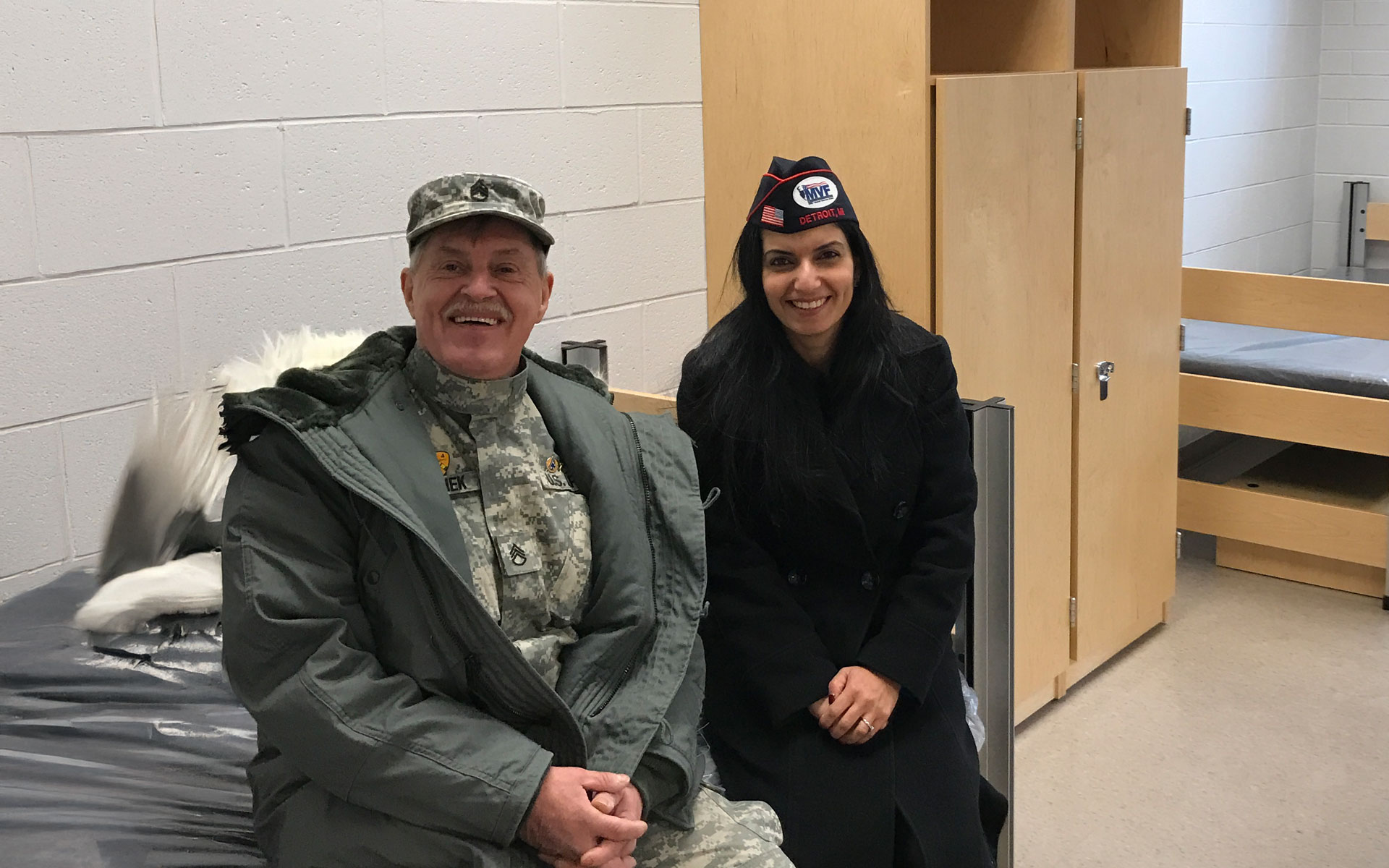
That is why organizations like the Michigan Veterans Foundation matter. MVF works with veterans in Detroit through transitional housing and services that support health, employment, life skills, and the move toward independent living. The work asks something of the whole community, because no single organization can meet every need alone.
As Veterans Day approaches on November 11, many of us will look for a way to say thank you. Gratitude can be spoken, and it can also be put into action. A donation helps support the work veterans rely on. A phone call can help you learn what volunteer opportunities are available. Sharing MVF’s mission can help someone else find a way to stand with veterans, too.
If you want your Veterans Day thank-you to reach beyond the holiday, support the people doing the work. Make a donation or learn more about the Michigan Veterans Foundation, or call 313-831-5500 to ask how you can volunteer. You can also contact MVF online.
A veteran facing homelessness should not have to navigate that next step alone. As a community, we can help make sure support is there when it is needed.